It is equipped with long and wide wooden tables with several small lamps centered in it for writing and/or studying. There are also arm chairs placed where different section borderline.
It is the first-floor light-orange-carpeted establishment with yellowish black-doted wood-slated walls and high ceiling. Figurines of so many characters from the books squeezed in their places at the end of the cabinets with crowded shelves. There is a whisper of background light classical music playing.
Everyone loves going there since it gives an impression as one had crossed a threshold and entered a new realm.
Librarians make sure their video section has all the family and children's movies in addition to the ones associated with their books. They also provide the neighborhood with any news about special tutoring programs, workshops, and with many social and cultural events.
The air teases the nostrils with scents of paper and wood polish in this dustless oasis. Even the washrooms feel special being decorated with fresh seasonal flowers.
At one end of the librarians' circulation desk that accommodates as many as five employees at the same time there is a four-feet high panel listing the most popular teenage novels. At the other end a similar panel displays library's recommended children's books.
Right next it there is a twelve inches wide and twenty inches long catalog displaying a photo-cover, a small summary, and even a brief information about a writer - for each of those recommended books.
It looks something like this:
 Mr. Popper's Penguins is a children's book written by Richard and Florence Atwater, with illustrations by Robert Lawson, originally published in 1938. It tells the story of a poor house painter named Mr. Popper and his family, who live in the small town of Stillwater in the 1930s.
The book has so many lessons how to care about animals just as if they were children but further more, it teaches the importance of seeking a solution and not running away from problems. This is all incorporated while building love and compassion for its characters. It's a classic book where children easily become interested in cute baby animals while learning many didactics from caring and smart adult characters.
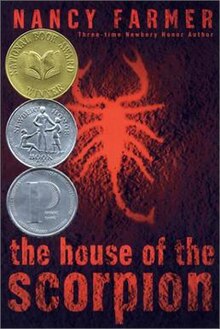 The House of the Scorpion (2002) is a science fiction young adult novel by Nancy Farmer. It is set in the future and mostly takes place in Opium, a country which separates the United States and Aztlán, formerly Mexico.
The book has won many awards like National Book Award as well as Newbery Honor. It is inspired by Farmer's own life. The book camouflaged many subjects to push boundaries and thinking like the fact that one of the main characters is a clone! Teens also unknowingly learn how not to judge illegal immigration: one size doesn't fit all. Most importantly, it teaches them about so many repercussions associated with drugs while conveying them away from the vice.
 Hoot is a 2002 young adult novel by Carl Hiaasen. The setting takes place in Florida, where new arrival Roy makes two oddball friends and a bad enemy, and joins an effort to stop construction of a pancake house which would destroy a colony of burrowing owls who live on the site.
This is a Newbery Award winner! A complex story where one of the themes is about a boy who steals and vandalizes and comes from a troubled home of un unstable mother. The book also deals with bullying that teaches teens about the magnitude of that problem, how to recognize it, and how to stop, or even better - how to prevent it. It also discusses the problems of lying, manipulation and many more: all the subjects teens start dealing with and can learn from this book how to solve the issues.
 Hatchet is a 1987 young-adult wilderness survival novel written by American writer Gary Paulsen.[1] It is the first novel of five in the Hatchet series.
This a Newbery Honor book. It teaches about the understanding and forgiveness like when the main character catches his mother cheating on his father. But when he gets stranded alone in wilderness and ends up desperately trying to survive, he puts many memories in different perspective. It is a great tale about divorce where many teens can relate to, including young adults whose friends come from broken homes. This classic celebrates its 40th birthday this year!
 Rules is the debut novel by author Cynthia Lord released in 2006.Twelve-year-old Catherine just wants a normal life which is near impossible when you have a brother with autism and a family that revolves around his disability. She's spent years trying to teach David the rules from "a peach is not a funny-looking apple" to "keep your pants on in public"---in order to head off David's embarrassing behaviors.
This is a Newbery Honor book while having won a Sunshine State Young Readers Award! This inspirational story is based on Lord's autistic son and his sister who had to learn how to cope with a family problem. But Lord went so much further: she spreads the awareness about anyone with a disability or special needs while conveying its mid-graders towards love, compassion, determination, but most of all she teaches patience while dealing with frustration and disappointments.
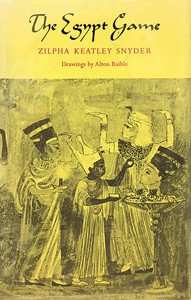 The Egypt Game (1967) is a Newbery Honor-winning novel by Zilpha Keatley Snyder. Set in a small college town in California, the novel follows the creation of a sustained imaginative game by a group of six children.
 The book has some great lessons about the Ancient Egypt while being multicultural. It is somewhat revolutionary book since it pushes the subject of kidnapping and murder of children to 4th graders. It teaches children how to be cautious but brave as well. It conveys them to think critically and to be observant in life so they could solve a mystery or predicament and not shy away and hide from the complexity of a task.
 Thief Newbery Honor book is a young adult fantasy novel by Megan Whalen Turner published in 1996. Eugenides, the queen’s thief, can steal anything—or so he says. When his boasting lands him in prison and the king’s magus invites him on a quest to steal a legendary object, he’s in no position to refuse. The magus thinks he has the right tool for the job, but Gen has plans of his own.
 This novel of amazing imagination and unforgettable characters pushes teens to think prudently about the blackmailing. Further more, it pushes a question: what would we do if saving ourselves would jeopardize every one else?
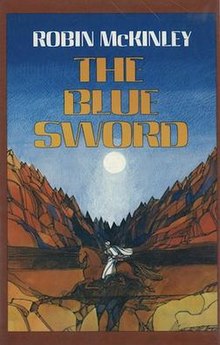 Blue Sword is a fantasy novel written by American author Robin McKinley, published in 1982. This is the story of Harry Crewe, the Homelander orphan girl who became Harimad-sol, King's Rider, and heir to the Blue Sword, Gonturan, that no woman had wielded since the Lady Aerin herself bore it into battle.
The book won Newbery Honor among several other awards. Its main character is a girl who's very smart and resourceful. It teaches the middle graders about the strong character where the girl never forgets the culture of her homeland while being powerful and magical while finding her place in another world of different cultures. One crucial lesson of the book: no matter how talented or smart we are, we must always retain our willingness to learn.
 Little Town on the Prairie is an autobiographical children's novel written by Laura Ingalls Wilderand published in 1941, the seventh of nine books in her Little House series. It tells the story of 15-year-old Laura's first paid job outside the home and her last terms of schooling.
This Newbery Honor novel teaches children about the blindness: its difficulties and how can one deal with it. It's a tale about sisterhood, great sacrifices, love, compassion, patience and more while having a historical value. It's also a beautiful tale about what a family is and the strength of its unity.
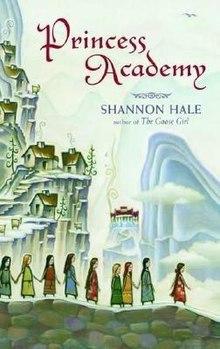 Princess Academy is a fantasy novel exploring themes of families, relationships, and education by Shannon Hale, published in 2005. It tells the story of fourteen-year-old Miri who attends a princess academy which will determine who wins the hand of the prince. This is a Newbery Honor winner among several other awards.
The most notable lesson for children is the one where a girl Miri, the main character, carries a great sense of compassion and understanding while striving to help the less fortunate ones with her academic lessons despite the bitter competition. Our female hero is intelligent and possesses great critical thinking and leadership skills who also demonstrates that without a hard work and discipline - a child or anyone could never achieve desired success. It also teaches how children will get awarded for their hard work, even if it takes much longer they anticipated.
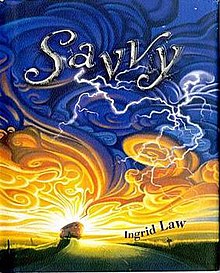 Savvy is a 2008 children's fantasy novel by Ingrid Law aimed at children aged nine to twelve years named in 2009 a Newbery Honor Book. Thirteen is when a Beaumont’s savvy hits—and with one brother who causes hurricanes and another who creates electricity, Mibs Beaumont is eager to see what she gets.
The main character is a girl whose power is to read people's minds, but only of those who carry ink like tattoos or similar. It's a very interesting lesson for mid-graders to look beyond the surface and deeper into people's feelings. It's a lesson of developing empathy among many others.
 The War That Save My Life is a Newbery Honor historical book by Kimberly Brubaker Bradley, published in 2015 for middle grade. An exceptionally moving story of triumph against all odds set during World War 2 where a nine-year-old Ada has never left her one-room apartment. Her abusive mother is too humiliated by Ada’s twisted foot to let her outside. So when her little brother Jamie is shipped out of London to escape the war, Ada doesn’t waste a minute—she sneaks out to join him.
It's a story where children learn it is possible to deal with issues that seem impossible to survive and cope with. A girl Ada has been abused by her mother physically and mentally. She spends her entire life crawling and can barely stand up. Didactic of courage, persistence, determination and empathy all entered a new dimension in this amazing book.
 The Wednesday Wars is a 2007 young adult historical fiction novel written by Gary D. Schmidt. The novel is set in suburban Long Island during the 1967–68 school year. The Vietnam War is an important backdrop for the novel. This novel was given a Newbery Honor medal in 2008.
This is a tale about religious differences as well as coming out of age as a teenage boy. It deals with common issues where teens can relate to like having a strict parent or a feeling that an adult with authority is out there to get you, like main character's teacher. "He" learns he was wrong. He even makes friends out of enemies. Most importantly, the book deals with many issues that take place at school where teenage readers spend so much time: a hot topic for high school adolescents.
 Last Stop on Market Street is a 2015 children's book written by American author Matt de la Peñaand which won the 2016 Newbery Medal. The book follows a young boy named CJ as he learns to appreciate the beauty in everyday things during a bus ride.
CJ’s journey with his Nana is not just a simple bus ride; it is a multi-sensory experience through which he discovers that beautiful music, nature and people surround him. CJ’s questions are familiar, and Nana answers him with gentle wisdom. Right up until their arrival at the last stop on Market Street, Nana guides CJ to become “a better witness for what’s beautiful.”
Beautiful story for children to recognize the world's many wonders through a simple act of observation that turns out is not an easy task after all. In the process, CJ learned and discovered many things about himself. It made him a better person - thanks to his wonderful Nana.
The library enjoys a huge success, especially once we made sure to have an updated website each week which brought all elementary school generations. We even have grandparents who read the updated newspapers and magazines while their grandchildren search and study for school. Sometimes they browse the internet while having eight computers at their disposition. Printing too is easy and free of charge. The library operates in the mornings or afternoons depending on a day while being a rarity for being open even on Saturdays. Since my team and I showed such an engagement with the community, we have received numerous donations in books, magazines and even some top movies! Most importantly, the library works closely with a local elementary school to make sure to include all the material a local child or a teen would require.


